Affichage des articles dont le libellé est Topic. Afficher tous les articles

samedi 3 février 2018

La Malédiction de la 83ème minute (OM 1989-1990).

Y avez-vous déjà songé?

Lors de la saison 1989-1990, l'Olympique de Marseille, période Tapie, est engagé pour la première fois dans la "grande Coupe d'Europe" après son titre de champion de France 1988-1989.

Lors des quarts de finale, atteints après avoir successivement éliminé les Danois de Bronby puis les Grecs de l'AEK, l'OM rencontre le Sredets Sofia, c'est à dire le CSKA Sofia, équipe dont le fer de lance est un certain Hristo Stoitchkov, la tourelle de défense un certain Trifon Ivanov et l'ailier droit, un certain Kostadinov, Emil. Ambiance, même si ceux-là n'ont pas encore accomplis leurs méfaits et n'ont, apparemment, mais on se méfiera, pas grand chose à voir avec ce qui suit.

Match retour au Vélodrome après un victoire 1-0 à Sofia. L'OM domine copieusement la rencontre lorsque survient le drame : le gardien Gaëtan Huard et son propre défenseur, Eric Mura, se télescopent. La blessure est grave pour le gardien de but : fracture ouverte. L'accident se produit à la 83ème minute de jeu. Le bulgare Urukov en profite pour marquer l'unique but de son équipe sur l'ensemble des deux matchs.
Puis la star de l'équipe de l'OM, l'avant-centre Jean-Pierre Papin, renoue avec un poste qu'il occupait quand il jouait en... poussins, en remplaçant son coéquipier dans les... cages. Faisant par-là quelque peu oublier la tragédie que venait de vivre Huard quelques secondes auparavant, l'image est si sympathique.
Huard sera éloigné des terrains jusqu'à la fin de la saison, certes, mais également toute la saison suivante.

Voici un résumé du match en video (on peut y voir la malédiction de la 83ème minute frapper à 3:54) :


Et puis l'OM se retrouve en demi-finales. Face à Benfica.
Après ce qui reste considéré aujourd'hui comme une véritable démonstration au match aller avec une victoire écrasante 2 buts à 1... l'OM se rend au stade de la Luz, à Lisbonne, pour y valider, très certainement, son billet pour la finale de la Coupe d'Europe.
Le match est âpre mais l'OM tient remarquablement bien le choc, jusqu'à la...83ème minute, et un but de Vata, attaquant de Benfica, principalement cantonné au banc de touche cette saison-là après avoir été le meilleur buteur du championnat portugais de la saison précédente grâce, principalement d'après, à ses pieds. Sauf qu'ici c'est un but de la main, du bras ou de l'épaule qui élimine Marseille, privé ainsi de finale européenne. La fameuse "main de Vata". Qu'il restait à corréler au telescopage entre Huard et Mura . Une malédiction vous dis-je.


Il paraît que si Huard n'avait pas été blessé, l'OM, armé de plus de sérénité en défense, serait assurément passé pour s'en aller défier le Milan AC à Vienne. En effet, un journal portugais n'avait-il pas titré à l'aube du match retour : "Castaneda, on compte sur toi". Castaneda, le remplaçant d'Huard, pas rassurant (du tout) pour ses coéquipiers, déjà au match aller, ne fut en effet pas bien meilleur au match retour, où les joueurs portugais s'employèrent, comme au Vélodrome, à le tester sur des longs ballons ou sur corner, bien aidés, en plus de cela, par un vent fort à Lisbonne. Mais sans succès. Le Benfica devait bien sa place en finale grâce à un but marqué par l'un de ses propres joueurs. De la main. A la 83ème minute.

Alors? 2 moments tragiques qui interviennent au même moment d'un match, à la 83ème minute, avec la terrible blessure d'un gardien titulaire souvent brillant et sans remplaçant vraiment au niveau, puis un but de la main (tiens tiens, comme par hasard on reste dans le jeu à la main) qui prive une formidable équipe, époustouflante lors de la première manche, d'aller en finale de Coupe d'Europe. Ce n'est pas une malédication ça?

Je vous le demande. Je vous le demande à vous Gaëtan Huard?

 Et puis c'est quoi ces ch'veux?


lundi 30 octobre 2017

Euro 2008 ratings (France Football)

Villa, Torres and Arshavin in the semi-finals Spain vs Russia (4-1)


Euro 2008 ratings, team of the tournament and top players by position with descriptions (from FF n° 3247 Spécial Bilan Euro 2008).


THE FINAL :

GER

------------------Lehmann-----------------
-----------------------6-----------------------
------------Mertesacker--Metzelder-----
Friedrich--------4----------4--------Lahm
----5--------------------------------------4---
------------Frings-------Hitzlesperger----
---------------6---------------------5---------
---------------------Ballack------------------
-------------------------5----------------------
Schweinseiger------------------Podolski
---------5-------------------------------5-----
---------------------Klose--------------------
------------------------5-----------------------54 coach : Löw.


SPA

--------------------Torres--------------------73 coach : Aragones.
-----------------------8------------------------
Silva----------------------------------Iniesta
--6----------------------------------------7---
------------Xavi------------Fabregas-------
--------------7-------------------6-------------
---------------------Senna--------------------
-------------------------7-----------------------
Capdevilla--------------------------Ramos
----6--------------------------------------7----
------------Marchena----Puyol-------------
------------------6------------6-----------------
--------------------Casillas-------------------
-------------------------7-----------------------


From the bench :

Lahm by Jansen (46th min.). Jansen 5.
Kuranyi for Hitzlsperger (58).
Gomez for Klose (79).

Xabi Alonso for Fabregas (63).
Cazorla for Silva (66).
Güiza for Torres (78).

referee : Rosetti 7.
Match : 16/20.
(1-0 for Spain, Torres).

Team Stats :
Shots : 4 - 13
On target : 3 - 7
CK. : 4 - 7
Fouls : 22 - 19
Off-sides : 5 - 4
Poss. : 33'15'' - 33'12''

Highlighted player : Senna. The short comment refers to Aragones at the same time as the one who had the good idea to naturalize him. On Senna, in gross : wonderful combination of finesse and power.

In the semi-finals RUS-SPA, the highlighted player was Fabregas. He entered the pitch after 35 min of play instead of Villa and gave 2 assists (2-0 by Güiza then 3-0 by Silva, final score. Xavi had scored the opener at the 50th, assisted by Iniesta).
Fabregas had the best rating with 7 étoiles, like his teammates Iniesta and Ramos.
The best-rated Russian player was Zhirkov with 6 étoiles.
Totals : 58 against 73.


ETOILES (outfield players) :
1. Podolski 37
2. Iniesta 36
3. Ballack 35
4. Lahm, Senna 34
6. Zhirkov 33
7. Torres, Xavi, Pavlyuchenko 32
10. Klose, Silva, Semak, Zyrianov, Altintop 31
15. Metzelder 30

ETOILES (goalkeepers) :
1. Lehmann, Casillas 32
3. Buffon 27
4. Akinfeev 26
5. Ricardo 22
6. Sar, Boruc, Lobont, Isaksson 29
10. Pletikosa 17


FF TEAM OF THE TOURNAMENT :

-------------------------Casillas-------------------------
---Ramos------Puyol-----------Pepe--------Zhirkov
--------------------------Senna---------------------------
-----------Altintop--------------------Modric------------
----Schweinsteiger----Villa---------Silva-------------

"Team made by taking in account the classement des étoiles as well as our special reporters' observations at pages...".

The following is about these pages were FF ranks the players by position (top 5) and also lists the disappointments.


FF TOP 5 by POSITION (using quotation marks will not mean that it will be always complete quotes from the article but it will be almost complete, all the essential remarks will be there).


KEEPERS :

"Casillas and the others"

1. Casillas
2. Van der Sar
3. Buffon
4. Boruc
5. Akinfeev

"Casillas never looked as strong as now at 27 years old. If he could have done better against Sweden on the Ibrahimovic's goal, the Spanish captain has dominated the rest of the competition reassuring his team with his catchings of the ball and his astonishing reflexes. In the Q-F's he won by 2 saves to 1 in the pso against Buffon. He always dives on the right side. Then against Russia he made a spectacular horizontal save on a Pavlyuchenko's attempt.
Behind him, it has to be the experienced and hard-wearing Van der Sar always solid and assured like against Italy of Toni and France of Benzema.
Buffon knew a little alert on a shot by Senna by releasing the ball onto his post but Italy would have probably not go through the first round if he had not saved a pk of Mutu with the hand and the foot against Romania.
Boruc, then, was the winner of a dozen of face-to-face with German, Austrian or Croatian strikers.
At last the Russian Akinfeev, in spite of 7 goals conceded against Spain has contributed to the good tournament of his team.
The old Turkish goalkeeper Rüstü, sub at the start of the tourney could have featured in this ranking thanks to his Q-F against Croatia during which he gave an assist for the Semih Sentürk's equalizer at the last second before to stop the pk of Petric. But his failed aerial intervention in front of Klose in the next round broke the magic."

The disappointments :
"If Germany reached the final, it's not thanks to Lehmann who is not beyond reproach on the two goals conceded to Turkey. But the biggest blow in the tournament shall go to Cech who precipitated the Czech Republic's elimination by releasing a slippery ball in the feet of the Turk Nihat."


SIDE-BACKS :

"Huge Zhirkov"

1. Zhirkov
2. Sabri
3. Pranjic
4. Lahm
5. Sergio Ramos

"He's the other Russian revelation of the tournament and given his age (25 years in August) he may have as much or even more offers than Arshavin. Lined-up at left-back by Hiddink, Zhirkov has rolled over the Greeks, Swedes and Dutches by his incessant courses, his calls for the ball, his dribbles, his crosses. Always in the right tempo, always pin-point technically and physically huge. But his big defensive difficulties against Spain underlined the obviousness : he is not a real left back.
The Turk Sabri makes the ranking almost for one single match (Ger-Tur 3-2), but his defensive and offensive performance in the S-F's was so huge that it is impossible to forget him.
The Croatian Pranjic, partner of Modric in the combinations also made his name by his finesse and his accelerations though he often had trouble to finish his matches.
The German Lahm, filled his role with determination. He has suffered against the Turks but his mental made the difference at the end of the match and his goal saved his team. However, his responsabilty is involved on the goal of Torres in the final.
At last, the Spanish Sergio Ramos has made talk his experience, his solidity but also his talent by having a nice offensive match against Russia.
We could have cited Corluka as well, the twin of Pranjic on the right side or the Lyonnais Fabio Grosso, one of the few Italians who did not disappoint."

Disappointments :
"Marcell Jansen struggled completely. Sagnol did not have the physique to play such a competition and Abidal never entered the competition. Seitaridis was far from his level of 2004. Bosingwa was not the announced star. The Czech leader of Milan AC Jankulovski could not avoid the mental explosion of his team against the Turks."


CENTRAL DEFENDERS :
"The class of Pepe"

1. Pepe
2. Puyol
3. Chiellini
4. Marchena
5. R. Kovac


"Amongst the favorites, Portugal stopped in the quarter-finals. One player was not unworthy though. Cristiano Ronaldo? No, Pepe, the Real Madrid's defender. Always well positioned, intransigent in the duels, reassuring and precise in the first pass, the Portuguese was one of the rare of his team, with Deco, to hold his own.
Difficult to not talk in this ranking about the complementarity and efficiency of the Spanish Pair Puyol-Marchena. Combavity and ardour of the first and rigor and sobriety of the second. Together they muzzled the Italian Toni and closed the Russians Pavlyuchenko and Arshavin down.
The Italian Chiellini features in the revelations of this Euro as well. The young defender of Juve, who plays lateal in club, has benifited from the injury of the captain Cannavaro - of which he is inadvertendly responsible - and of the Materazzi's fail against The Nethelands in order to imose himself in the Italian back-line. With him, Italy took only one goal against Romania, France and Spain.
The two Croatian central defenders, Kovac and Simunic equally rocked, in spite of some slowness whereas the Russian Kolodine, redoubtable against The Netherlands, missed a lot to his team in the semi-finals".

Disappointments :
Finalists of the last World Cup, the italian Materazzi and the French Thuram swallowed water against the Dutch strikers' liveliness. Both began the tournament as starters and ended it on the bench. Without being catastrophic, the Greeks Dellas and Kyrgiakos did not provide to the outgoing champion the same defensive serenity as in 2004.


DEFENSIVE MIDFIELDERS :
"Senna, the cornerstone"

1. Senna
2. Altintop
3. Semak
4. De Rossi
5. Frings

"The Spanish Makelele, positionned before the defense, was the cornerstone of the system Aragones. Tireless cleaner, bringing up the ball, he's the man of the first impulse. A big heart, a beautiful vision of the game, a resistance that often made him finish the games better than he started it : the Villareal player reaveled himself at this level.
The Turk Altintop is the true playmaker of his team. Elegant, able to switch from right back to defensive midfielder, and to finish the games as a playmaker, his work-rate, his vision of the game, his tactical sense and his technique have impressed.
The Russian Semak, former PSG player, for his part has played with sense of positionning, with anticipation, the quality of the first pass and his ability to efficiently participate in the offensives in order to realize a great tourney.
De Rossi brang coherence and solidity to the Italian game.
At last Torsten Frings, protector of Ballack in the first games, then absent during 2 games and half through injury, came back at the end of the race in order to hold an essential role.
We could have cited the tall Dutch man Orlando Engelaar as well, magnificient of power and of combativness in the first round, but he sank in front of the Russians.
At last the Greek Angelos Basinas, fluid player and combative, is the only representant from the champions 2004 who was able to extricate himself".

Disappointments :
Firstly, obviously Patrick Vieira, who did not play a single minute and cruelly missed to "Les Bleus". Toulalan was for his part a bit just physically so he could not avoid that his game looked muddled. Pirlo had no more fuel. Lining up Chivu, the Romanian captain, at a midfielder position, it's spoiling the goods of a superb central defender. Tobias Linderoth, the Swede, announced as the leader of his team, did not play. Hardly more terrible appraisal than the one of the Lyonnais Källström.


OFFENSIVE MIDFIELDERS :

"Modric, brilliant artist"

1. Modric
2. Schweinsteiger
3. Silva
4. Podolski
5. Sneijder

"Contrarly to Arshvin, the Cruyff of the Balkans managed to have a series of games. Big presence, perfect tehnique, Modric always plays frontwards, makes the good choices and bring some speed to the game of a team that sometimes lacks of it a bit. He's the only Croatian to play most of the time in one touch. Difficult to dissociate the two German players of sides, the buddies "Poldi" and "Schweini", as percussive as efficient as much as the other. Both were the big men of the Mannschaft's run in the competition. With them, David Silva, the will-o-the-wisp on the left side, percussive and combative. Wesley Sneijder, for his part, has embodied the great Dutch first round thanks to his technique, his presence, his art of the set-pieces. We could have considered that the great performance of Deco in the first half against Germany could have been rewarded better. He's still the mastermind of Portugal. The Russian Zyrianov is the accomplice of Arshavin in national team as at Zenit St.-Petersburgh, but he get busted against Spain in the semi-finals.
The Turk Tuncay realized high-leveled performances, physically it's a player who makes his opponent suffer. Rafael van der Vaart has also shown his class and his sense of the game. At last, we have to mention the case Ballack, who became a mental leader, and moral, but who is less influent on the pitch in spite of his important goals".

Disappointments :
"The Italian Perrotta traversed the tournament like a shadow. A bit like the Greek Karagounis, so good in 2004. The Portuguese Simao doesn't play the essential role that could be his. The Austrian Ivanschitz is not the half of the announced star. We did not find back the the Malouda of 2006 and Franck Ribéry - best French - was ill-fated".


STRIKERS :

"Villa, the most consistent"

1. Villa
2. Pavlyuchenko
3. Torres
4. Arshavin
5. Klose

"In Spain, one striker can hide another. Whilst Europe was expecting Torres, she has most of all seen , before the final, David Villa. The scorer of Valencia began spectacularly the tourney. 4 goals in 2 matches : a hat-trick against Russia and the winner against Sweden. Beyond that? An incessant pressing on the opponents' defenses, a real complicity with Torres, some gestures of class, but an unfortunate injury against Russia...
The Russian Pavlyuchenko, him, has scored one goal less than Villa, but he has weighted as much on the defenses. In spite of his big carcass, that makes him looking clumsy, the Spartak player shined with his deflections with the head, his technique with both feet, his dribbles and his shots en force or in finesse. If Torres was discreet during a long time, he was on the other hand decisive in the final, riding roughshod over Lahm and Lehmann in order to scor the only goal of the game. The Russian Arshavin has proven in two games, against Sweden and -most of all - The Netherlands, that he was maybe intrinsically the best of all. But if the new star of St.-Petersburgh had real screen presence in the quarter-finals (1 goal, 1 assist), he has completely missed his semi-final against Spain. Some valued assets like Klose, van Nistelrooy or even Irahimovic, the authors of 2 goals each, were true to their reputation. Special bonus, at last, for the Turks Nihat and Semih Sentürk. The double of the first against the Czech Republic has propulsed his team in the quarter-finals and the goal of the second against Croatia has allowed them to qualify to the semi-finals"

Disppointments :
"We were expecting Toni and Benzema, the top scorers of the German and French leagues. They finished up with 0 goals and a boatload of missed chances, most of all the Italian. Cristiano Ronaldo, who's amongst the favorites in the course for the next Ballon d'Or FF, has disappointed him too. The Portuguese has not played badly, he was just ordinary, which, for a player like him, comes to the same thing."


A few complementary notes taken from the short profiles of the 23 Spaniards : in view of the said "profiles", most of the players of La Roja had their best game against Russia in the Semi-finals. Xavi and Iniesta had a difficult match against Italy in the quarter-finals so the the whole Spanish team was less good on this match. The "marathonian" David Silva, "unheralded" prior to the tournament "has shown why Aragones swear by him since several months : he's the one who energizes the Spanish team's game". Cazorla, "was an intermittent of choice that Aragones launched generally in the second half instead of Xavi or Iniesta in order to brang a bit more of percussion to his team". Puyol "reigned in the Spanish penalty area".

lundi 24 octobre 2016

The 30 nominees for the Ballon d'Or 2016 (with players profiles)

Here are the 30 nominees for the Ballon d'Or 2016 with the reasons why they have been chosen by France Football (translation from the FF website).

Sergio Agüero
Argentine. 28 years. 79 caps, 34 goals. Position : striker. Club : Manchester City.
Palmarès 2016 : League Cup. BO 2015 : 13th.
Why he deserves to be here : 34 goals in all competitions including 22 in the Premier League, that is his record in 2016. Most of all, he seems safe from injuries now. And Agüero in full-form is an Agüero necessarily in the 30.

Pierre-Emerick Aubameyang
Gabonese. 27 years. 51 caps, 21 goals. Position : striker. Club : Borussia Dortmund.
Palmarès 2016: none. BO 2015 : not listed.
Why he deserves to be here : the Gabonese took it to the next level in 2015 and confirmed in 2016. The former "Vert", very regular with Borussia Dortmund, is henceforth one of the very best best goleadors in Europe.

Gareth Bale
Welsh. 27 years. 64 caps, 25 goals. Position : striker. Club : Real Madrid.
Palmarès 2016 : Champions League. BO 2015 : 16th.
Why he deserves to be here : the year 2016 would have been the one of the consistancy for Gareth Bale. Efficient in the game of Real, with which he won the CL, the Welsh has most of all lead his country to an unexpected semi-final during the Euro 2016.

Gianluigi Buffon
Italian. 38 years. 165 caps. Position : keeper. Club : Juventus.
Palmarès 2016 : Italian league. BO 2015 : not listed.
Why he deserves to be here : he makes his come-back in the nominees list. Throughout a year during which nothing or almost can really be reproached to him. He could not do anything in front of Bayern in the CL Round of 16 and has stopped 3 German shots during the penalty shootout in the quarter-finals at the Euro. The whole thing with a Scudetto with Juve.

Cristiano Ronaldo
Portuguese. 31 years. 135 caps, 66 goals. Position : striker. Club : Real Madrid.
Palmarès 2016 : Euro, Champions League. BO 2015 : 2nd.
Why he deserves to be here : do we really need to say why? Without being brilliant during the two finals won, the Portuguese has lifted the CL and the Euro trophies. Essential in the previous rounds, CR7 continued to show an extraordinary realism.

Kevin De Bruyne
Belgian. 25 years. 47 caps/ 12 goals. Position : midfielder. Club : Manchester City.
Palmarès 2016 : none. BO 2015 : 18th
Why he deserves to be here : more and more he took a certain dimension under the Guardiola's command. An upward trajectory started at City well before the arrival of the Catalan coach as he has reached the CL semis.

Paulo Dybala
Argentine. 22 years. 6 caps. Position : striker. Club : Juventus.
Palmarès 2016 : Italian League, Cup of Italy. BO 2015 : not listed.
Why he deserves to be here : if we are still waiting for his first goal with the Argentina national team (with which he did not participate to the Copa America), Paulo Dybala was a delightful player to watch in the Serie A.

Diego Godin
Uruguayan. 30 years. 105 caps, 8 goals. Position : defender. Club : Atlético Madrid.
Palmarès 2016: none. BO 2015 : not listed.
Why he deserves to be here : let's give the floor to the defence, to courage, to the determination and to the the talent of the Uruguyan rock, leader of the Colchoneros defence. A defence which serves as the model in Europe.

Antoine Griezmann
French. 25 years. 38 caps, 14 goals. Position : striker. Club : Atlético Madrid.
Palmarès 2016 : Euro top scorer (6 goals). BO 2015 : not listed.
Why he deserves to be here : Double loosing finalist, he has moreover missed a penalty in the CL Final against Real Madrid. Nevertheless. Best scorer and player at the Euro he has taken it to the next level.

Gonzalo Higuain
Argentine. 28 years. 65 caps, 32 goals. Position : striker. Clubs : Naples then Juventus.
Palmarès 2016: Serie A top scorer (36 goals). BO 2015 : not listed.
Why he deserves to be here : the scoring-machine of the Italian league, who also distinguished himself at the Copa America (4 marks in 6 games). And it is far, but well far to be over...

Zlatan Ibrahimovic
Swede. 35 years. 116 caps, 40 goals. Position : striker. Clubs : PSG then Manchester United.
Palmarès 2016: French League, French Cup, French League Cup, Community Shield. L1 top scorer (38 goals). BO 2015 : 11th.
Why he deserves to be here : 35 years old, so what? Even if he is less in view on the last matches, the Swede still shows some brillinat statistics this year between PSG and Manchester United.

Andrés Iniesta
Spanish. 32 years. 115 caps, 12 goals. Position : midfielder. Club : FC Barcelona.
Palmarès 2016 : Spanish League, Spanish Cup, Spanish Supercup. BO 2015 : 9th.
Why he deserves to be here : nothing much to reproach to the Spanish legend. A delight at the Barcelona and Spanish midfield. An indisputable place amongst the best.

Koke
Spanish. 24 years. 28 caps. Position : midfielder. Club : Atlético Madrid.
Palmarès 2016 : none. BO 2015 : not listed.
Why he deserves to be here : it's a beautiful reward for this pure product of the Atlético's house. Unavoidable in the 11 of the Simeone's Colchoneros, Koke only played 19 minutes in the last Euro. At this rythm, his influence in the national team will necessarily increase.

Toni Kroos
German. 26 years. 74 caps, 12 goals. Position : midfielder. Club : Real Madrid.
Palmarès 2016 : Champions League. BO 2015 :21th.
Why he deserves to be here : when it's about the metronome of a team or of a selection, there's not really better in world football.

Robert Lewandowski
Polish. 28 years. 84 caps, 40 goals. Position : striker. Club : Bayern Munich.
Palmarès 2016 : German league, German Cup, German Supercup. BO 2015 : 4th.
Why he deserves to be here : we can have regrets about his Euro, failed enough. But apart from that, the year of this Polish striker was rather outstanding. And most of all very prolific at the edge of the Bayern's attack.

Hugo Lloris
French. 29 years. 84 caps. Position : keeper. Club : Tottenham.
Palmarès 2016 : none. BO 2015 : not named.
Why he deserves to be here : keeper of the the Premier League best defence, the captain of the French team equally shown himself more than solid during the Euro 2016. The synopsis of a career that has reached a milestone this year.

Riyad Mahrez
Algerian. 25 years. 26 caps. Position : midfielder. Club : Leicester.
Palmarès 2016 : English league. BO 2015 : not named.
Why he deserves to be here : some dribbles, some goals, some efficiency, a Premier League won, a title of the English league best player, good beginnings in the Champions League : that is in a few words the summary of the prolific year of Mahrez.

Lionel Messi
Argentine. 29 years. 114 caps [56 goals, not specified]. Position : striker. Club : FC Barcelona.
Palmarès 2016 : Spanish League, Spanish Cup, Spanish Supercup. BO 2015 : 1st.
Why he deserves to be here : the Argentine is evidently present, without any surprise. 5 times winner of the trophy, Messi has been far to be disappointing this year...

Luka Modric
Croatian. 31 years. 94 caps. Position : midfielder. Club : Real Madrid.
Palmarès 2016 : Champions League, European Supercup. BO 2015 : not named.
Why he deserves to be here : named for the first time in the history of the trophy, the Croatian shows a beautiful regularity be it in club or with the selection.

Thomas Müller
German. 27 years. 81 caps. Position : midfielder. Club : Bayern Munich.
Palmarès 2016 : German league, German Cup, German Supercup. BO 2015 : 6th.
Why he deserves to be here : it's the fourth consecutive nomination for the German in the course for the Ballon d'Or. Poetic justice for the Bavarian who is maybe the most consistent for his team each year.

Manuel Neuer
German. 30 years. 74 caps. Position : keeper. Club : Bayern Munich.
Palmarès 2016 : German league, German Cup, German Supercup. BO 2015 : 7th.
Why he deserves to be here : can we really say that the German keeper lost his leadership at his position on the international scene? Not that sure.

Neymar
Brazilian. 24 years. 73 caps [49 goals, not specified]. Position : striker. Club : FC Barcelona.
Palmarès 2016 : Olympic tournament, Spanish League, Spanish Cup. BO 2015 : 3rd.
Why he deserves to be here : in addition to being efficient in La Liga (even if we would have liked to see him more decisive in the CL), Neymar has yielded the olympic gold medal at home for his country, Brazil. He's celebrating here his 6th consecutive appearance. A sign that the boy really belongs to the best.

Dimitri Payet
French. 29 years. 30 caps [7 goals]. Position : midfielder. Club : West Ham.
Palmarès 2016 : none. BO 2015 : not listed.
Why he deserves to be here : a big first for him. His feats during the first part of the Euro 2016 with Les Bleus and his fantastic goals and actions have convinced the jury.

Pepe
Portuguese. 33 years. 83 caps. Position : defender. Club : Real Madrid.
Palmarès 2016 : Euro, Champions League. BO 2015 : not listed.
Why he deserves to be here : a complete year for the Portuguese. With Real and at the Euro 2016, he won everything! He had his importance in each one of the competitions.

Paul Pogba
French. 23 years. 42 caps. Position : midfielder. Clubs : Juventus then Manchester United.
Palmarès 2016 : Italian League, Italian Cup. BO 2015 : 15th.
Why he deserves to be here : he can annoy, sure, totally disappear during a match, sure, but the most expensive player in History could show at Juve and intermittently with Les Bleus and his new club Man U, that he had the class and the stature to be amongst the best.

Rui Patricio
Portuguese. 28 years. 55 caps. Position : keeper. Club : Sporting Portugal.
Palmarès 2016 : Euro. BO 2015 : not listed.
Why he deserves to be here : the only representative of the Portuguese league was one of the great architects of the success of the Cristiano Ronaldo's teammates during the last Euro in France.

Sergio Ramos
Spanish. 30 years. 140 caps. Position : defender. Club : Real Madrid.
Palmarès 2016 : Champions League, European Supercup. BO 2015 : not named.
Why he deserves to be here : boss of the Real Madrid defence since years, he lead his team on the roof of Europe. He has for instance scored in the CL Final against Atlético.

Luis Suarez
Uruguayan. 29 years. 88 caps [47 goals]. Position : striker. Club : FC Barcelona.
Palmarès 2016 : Spanish League, Spanish Cup, Spanish Supercup, La Liga top scorer (40 goals). BO 2015 : 5th.
Why he deserves to be here : maybe the most beautiful trigger in Europe. A model of efficiency in front of the goals.

James Vardy
English. 29 years. 12 caps.Position : striker. Club : Leicester.
Palmarès 2016 : English League. BO 2015 : not listed.
Why he deserves to be here : second best player of the Premier League, Champion of England, never stopping collecting goals. In brief, a nice recompense at 29 years old.

Arturo Vidal
Chilean. 29 years. 84 caps. Position : midfielder. Club : Bayern Munich.
Palmarès 2016 : Copa America, German league, German Cup, German Supercup. BO 2015 : 17th.
Why he deserves to be here : Copa America winner, he is the only Chilean in the 30. But it is not only with the selection that Arturo brang the house down. With Bayern, he is unavoidable. 

The complete ranking will be revealed December the 13th , 2016.

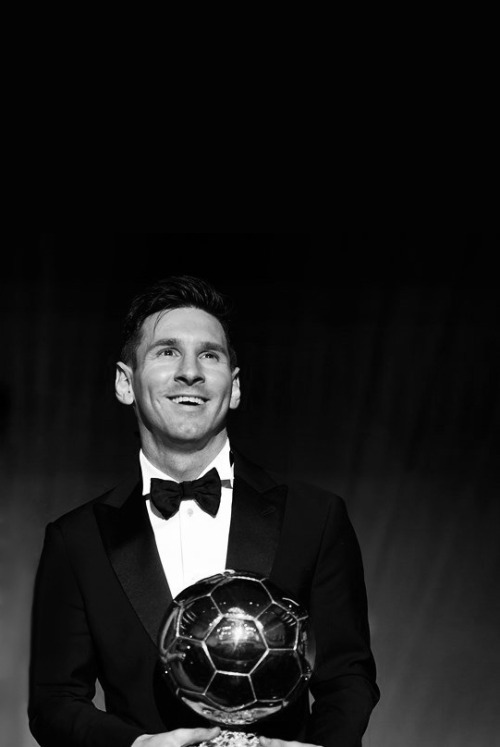
Lionel Messi, Ballon d'or 2015

mercredi 28 septembre 2016

Helenio Herrera speaks great players


November 1960. The new coach of "F.C Internazionale", the French-Argentine Helenio Herrera is interviewd in Milan by Max Urbini and Jean-Philippe Rethacker for Football Magazine (mensual supplement of France Football).
At this occasion, "Mister H.H" as he was nicknamed, talks about his work, his goals with Inter (winning the scudetto, what would be achieved in 1963), his methods (tactical, technical, psychological) not without arguing against the idea that he woud be only a coach with defensive style for his team (due to the use of the 'libero'). Here is proposed the part of the interview related to the Herrera's thoughts on players that he has observed during his not over yet, far from that, coaching career. 

Indeed, as he reveals to his interviewers who ask him about what is his secret : "since I'm a coach, I update a serie of notebooks including at first a note card for all the Spanish, Italians, foreign players. On this card I describe the player : he is tall, he is small, he is thin, he is slow; he possesses a particular feint : on the right, on the left; he marks closely his man, he covers; he has a good shoot : with the right foot, he has no left foot etc." [...]. Another notebook which is about international football allows me to describe how are playing Red Star Belgrad, Wolverhampton, Reims or Dynamo, Sekularac, Hanappi, Piantoni, Charlton or Voinov".
A bit later in the F.F article, Herrera talks about some more or less illustrious players (more 'more' than 'less') that he had under his command, or not, in a more precise way.

It starts with the players that he knew during his spell at Stade Français (1945-1948) and Ben Barek .

"I had detected Larbi in Casablanca. During a training camp that I was leading in Morocco, I was attending to a match between Italian prisoners and a Morrocan team. When I wanted him to join Paris they said that I was crazy. They told me : 'Ben Barek, he is finished'. But he came for the record transfert-fee of one million of francs. And Larbi made a 4 years brillinat career at Stade. Then 4 more at Atletico de Madrid. Both clubs did not regret to acquire him, because in return, he brang millions in. He was an exemplary athlete, who did not drink, who did not smoke. Outstanding player, he had only one little defect, he was not very fast. But his breath was inexhaustible, his passes were millimetric and his intelligence of play was exceptional. He progressed a lot in shooting in Spain where we like the 'goleadores', the scorers. And what a charming boy, simple, faithull, serious. Very practicing, I still can see him making his prayer into one lockeroom's corner.

There was also Marcel Domingo; he was one of the best keepers that I used to know. He was unfortunate to play an unsuccessful France-Italy as he had a hand-injury. At an international level, he should have had a more brillinat career because he had a formidable grinding. He had more means than Darui. Unfortunately Marcel always lacked ambition and self-confidence. As a coach, he doesn't have the expected results for the same reasons.

Yet there was Nyers, the "Great Nyers" as he called himself with modesty. I saw him at the beginning of this season. He came to offer me his services at Inter where he already played after his departure from Stade. He has grown old. But what a winger it was : terrific shooting of the ball and speed. He did not see the game clearly, but as there was Ben Barek in addition!... Etienne [the French for Itsvan] was unfortunately a true Magyar, fantasist, changeable, and not much thrifty. He earned a lot of money but I'm not sure if he was able to save it".


Then Herrera briefly talks about Grillon, Hon, Luciano with some anecdots about how their transfers happened before to close this chapter about his career in France with the Swede Carlsson, what constituted a good transition with Spanish football : "Garvis Carlsson that I had detected in the 1948 Olympics, who stood two or three months at Stade before to join Atletico de Madrid and Spain where his fast play, his mobility, his fineness allowed him to impose instantaneously and brilliantly himself. The intelligent Garvis is today the A.I.K assistant-coach in Stockholm".

Spain. Di Stefano : "in 1952 when I saw in Madrid, for the 50 years of Real the Millonarios team, I wrote in L'Equipe and France Football : 'I've just seen the best centre forward in the world'. I was not mistaken.! I was then the first to propose a contract to him. He told me about his trouble with River Plate, his illegal situtation and as the Atletico de Madrid's directors were less buisnessmen than those of Real, it was the latter who prevailed.

Alfredo Di Stefano is really the most complete of all. He belongs to the great football lovers circle like I do. He does not neglect any advice. He said of me : 'He's the Saporta of the coaches'. One of the best compliments ever given to me.

The second is Suarez, with a difference of ten years? Yet he is more fine than Di Stefano, less powerful but maybe more skilled in the work and the brushing of the ball. He has a frail muscle, but thanks to the training that I imposed to him (no exercises demanding force) he had overcome his fragility. He is an intelligent and cheerful boy.

Then comes Kubala who is a technician in a class of his own, a bit slow, more and more slow. He will be a good coach for the young.

Kocsis is a very serious Hungarian, exceptional player with the head and opportunist. He is always on the lookout for the goals. Unfortunately he doesn't work much in defense. The essential is to know how to use him as he is. Here is another serious problem for the coach : knowing how to find the exact position of a player and knowing how to compensate the weaknesses of one with the forces of another.

Let's not talk about Czibor who is good but a bit crazy. And not serious enough in life to make a true footballer. He likes too much alcohol in particular.

Another Spanish footballer always made a great impression on me : Sevilla's Pepillo who possesses the super-class but who is unfortunately too frail, too devoid of athletic means. If I had to set up a ranking, I would do it like that :

1. Di Stefano
2. Suarez
3. Carlsson
4. Ben Barek
5. Evaristo

You'll take note by passing that they are all strikers."

And now at Inter, our coach talks about his new horsie : "since 18 years, Inter Milan is running after the Champion of Italy title. The president Mr. Moratti (Italian oil mogul) welcomed me saying this to me : 'I have been lucky in everything in life, except for football. I hope that you will arrange this!'

And I believe that it is again a striker of class that will help me to reach this goal : Antonio Angelillo, 23 years, a new Di Stefano".


Then 'Mister H.H' thinks critically about the 'calcio' that he has just joined and about two players in particular : "when I arrived here, I was surpised by two things : primo the rythm of the calcio way more slower than the one of the Spanish football, secundo the much prudent game, too defensive of the Italian teams. I was still staying with the memory of the pre-war Italian football, rapid, infernal, where us French men, were regularly beaten for a split second in the attack of the ball. In Spain, the temper and the qualities of the Latin still were here. Here the Italian players play stopped, decompose their technique. I believe that men like Liedholm or Schiaffino (old-fashioned stars) caused harm.

Etc. etc. Then he says that with Barcelona he played offensively so that he'll do the same with Inter, that the catenaccio doesn't permit to become the champion.

Still about his current team, Inter, he later talks a bit about Corso : "the little winger Corso will be soon one of the best European players. He is a lefty and he reminds me Puskas for his technique and skills and his shooting. He's not 20 yet". And talks again of Angellilo : "I have found here a second Di Stefano, Argentine of origin him too, Angellilo (23 years old). Believe me this one will become as strong as Alfredo. He is as much complete, scores goals, sees clear, works much, shoots fast, is quick and most of all is very calm in the decisive moment. This placidity at the moment of shooting, it's the common point between all the very great players. See Di Stefano, Suarez, Evaristo, Puskas. I make use of Angellilo like Di Stefano, I let the rein down on his neck".

We know that Angelillo will leave Inter at the end of this season. Some months later, Football Magazine will untitle an article as follows : 'Herrera-Angelillo it's over, because of a blonde". Indeed, 'H.H' will reproach to the footballing star a relationship with a famous actress of the time in Italy, to what Angelillo will not react kindly, tired with the Herrera's system, and making the choice of 'his freedom'.

Back on what Herrera expresses about the players in this exchange with journalists, we can see pictures of them illustrating the article and it is accompanied with captions which are Herrera's words (use of brackets). Most of the time it is the same exact ideas as transposed in the article. However, it is slighlty rephrased for Ben Barek : "an exceptional athlete, whose the seriousness and the simplicity were rivaled only by his class". The caption that goes with the picture of Suarez brings a new point : "He is less powerful but maybe more fine than Di Stefano. I believe that he is the best current player."

Again, about Ben Barek and Nyers at Stade Français, earlier in the article : "to get the most of an exceptional combination like the one on the left wing of Stade Français Ben Barek-Nyers (who fought like cat and dog), I said to Larbi that he was the best as he set-up the goals and straight after, I said to the Magyar that he was matchless as he was the one who scores the goals".

We have concentrated mainly about his view on the players here but anything goes in this article.
Here's the title and the introduction of it :

---- ---- --- ---
HELENIO HERRERA : MY BLUFF IS WORK!

Picturesque character in world football, Helenio Herrea is criticized by some, praised by other. He drives on in spite of everything with his love for football, his enthusiasm, his psychology and his secrets. What are they these secrets of this coach made sorcerer? Max Urbini and J.-Ph. Retackher went to Milan (where H.H is coaching this season at Inter), to collect the confidences of Helenio Herrera on recorder. You will see that he is not short of ideas in football. Only the psychology, the hardwork, the study of the events and of men are efficient.
--- --------- --- ---------

A picture testify that the meeting between 'the sorcerer' and the two journalists actually happened. With, in the forefront, a big tape-recorder. For a pretty much re-written interview assuringly (no use of brakcets in the article) which still must naturally respect Herrera's own words, and his ideas.

At the end of the article, there is also a picture of Lorenzo Buffon (the uncle of 'Gigi', they're resembling each other very much on this one) with that caption : "under the Herrera's regime, Buffon lost weight and found wings again (it is the same word for a regime and for a diet in French : 'régime'). There is also a picture of Herrera and his boys, organized like a flock, Angelillo ahead, with the French-Argentine leading them, sideways, like a shepherd. They're training very early in the morning. In the first ranks, the boys look dreadful and/ or asleep (a few keep their head up), under the surveillance of their coach with tense face. The ones who are following, behind Herrera, are just laughing (they keep looking at the ground though).

It is not the same picture than this one here, but :


The Football Magazine picture looks more 'right at the beginning of the training' and this one (source unknown) more 'end of the training' or of some exercise.

7 years later, in an interview conducted by Robert Vergnes for France Football, Herrera is asked to make a best XI based on what the coach had observed in the last 20 years. "Let's look at this" he says. Then, pell-mell, he cites : "Yashin, Pelé, Mazzola, Di Stefano, Facchetti, Armfield, Djalma Santos, Boszik, Ben Barek, Suarez, Corso, Jonquet, Charlton, Kopa, Law, Eusebio. You can see that there would be good stocks and very certainly that I forgot some very good ones too...".

jeudi 8 septembre 2016

Foreign players of the French League profiles (up to 1960)

In November 1960, France Football (in his monthly supplement Football Magazine) makes the review of the foreign players of the French League since 1910.


1910-1940 : THEY STARTED UP FRENCH FOOTBALL


ENGLISH ANCESTORS Pic (quite big) : KENNEDY (R.C Paris)

The English men arrived in France with football. In a first time in the North, Milner and Farnfield in Calais, Peacock in Roubaix, Owen, Bowman, Six in Lille, Turner and Mathey at Racing. Then they invaded Languedoc : Gibson, Martins, Parkes, Harrisson, Cornelius, Barrett, Hewitt at F.C Sète. Afterwards, the British men were represented in Cannes by Aitken, at Stade by Bunyan, in Boulogne by Newell, in Lille by McGowan, in Rouen by Barnes, in Sochaux by Leslie and at R.C Paris by the small and slick Kennedy.

HUNGARIAN TEACHERS Pic : KOHUT (Marseille)

The creation of professionalism in 1932 attracted lots of Hungarian footballers in France. Let's enumerate them : Bukovi and Lukacs (Sète), Kalmar (Roubaix), Berkessy (RC Paris), Kalocsaï and Moré (Lille), Kohut and Eisenhoffer (Marseille), Szabo and Bradac (Sochaux), not counting the Magyars who were naturalized. The most of these players brang to their French partners the model for a perfect technique.

YUGOSLAVIAN ARTISTS Pic : Yvan BECK (Sète)

There was also several Yugoslavians. Like the English men, they most of all reinforced the Languedocians clubs : Sekulic at Montpellier, Stefanovic at Sète and Yvan Beck, the redoubtable gunner at Sète.

CONSCIENCIOUS SWISS MEN Pic (big) : Trello ABBEGGLEN (Sochaux)

The Helvetian football provided the three Kramer brothers to F.C Sète then at Montpellier. Came after them the goalkeeper Séchehaye at Club Français, the centre-half Bruhin at Marseille and most of all the matchless inside of F.C Sochaux Trello Abbegglen. All were players with exemplary consciousness and correctness.

DUTCH GOALSCORER Pic : BACKHUYS (Metz)
He was the only marking Dutch man (if we can say) in the pre-war era. His shooting (foot and head), his efficiency, were as famous as his long legs and his protruding ears. He was the star of the team of Metz which was runner-up in the Cup in 1938.

SKILFUL AUSTRIANS Pic : JERUSALEM (Roubaix)

After the Wunderteam men Jordan and Hiden (who became French), with Henri Hiltl, imposed himself at Roubaix Jerusalem, the stratege with receding hairline and with the Viennese touch of the ball.

GERMAN PUNCHER Pic : Ossi ROHR (R.C Strasbourg)
The R.C. Strasbourg's centre forward, Ossi Rohr, was, with the Marseille's back Schnoeck, one of the rare German players to bring something to French football. His athletic power, his energy, his shots, were impressive.

EBULLIANT SPANIARDS Pic : URTIZBEREA (Bordeaux)

Iberian football was more generous pre-war than after. The first Spanish who came to France was the back of Racing Anatol. Then there were afterwards Balmanya and Escola (Sète), Zabalo R.C Paris), Mancisidor and Urtizberea the ox (Girondins de Bordeaux). We'll join to them - by style affinity – the Brazilian Vasconcellos (Marseille) and the Uruguayan Diaz (Red Star).

Now, and before to continue the review, we can read the following insert on the first double-page :

THEY HAVE CHOSEN FRANCE Pics : Hiden (very big), Hiltl, Simonyi, Koranyi and Ujlaki.

French football, in general, and the French National Team, in particular, often felt well to welcome naturalized players. They were numerous, indeed, to settle in our country and to choose France as motherland. Let's recall the most famous cases.
Pre-war, those of Anatol (Spanish), Yvan Beck (Yugoslavian), Désiré Koranyi, André Simonyi, Kaucsar, Siklo, Weiskopf (Hunagarians), Hiltl, Jordan and Hiden (Austrians).
And post-war, those of Lechantre (Belgian), Skiba (German), Ujlaki (Hungarian) who were internationals, of Gonzalès (Argentine) and Andersson (Swede) who almost been.

And this one on the next double page :

FRENCH MEN OF IMPORT Pics : Courtois, Cazenave, De Bourgoing.

In Italy, we call them « oriundi », that is to say of Italian origin. In this way the Monti, Schiaffino, Lojacono, Julinho, Sivori, Angelillo could reinforce the calcio. In France, these footballers of French origin (by their parents or grandparents) were Uruguayans before the war and Argentines after the war.
The most famous French-Uruguayans played at Sochaux : Cazenave, Duhart (both internationals), Irrigaray. There was a French-Argentine as well at Sochaux : Lauri. Today the French football is invaded by the players of French origins who were born in Buenos Aires : Gauthier (Nancy), Combin and Rambert (Lyon), De Bourgoing and Dandru (Nice) and Muller (Sochaux).
A particular case : the one of Roger Courtois, born in Lausanne, but who was a French international because endowed (like his teammate Lehmann) with the double-nationality.


1945-1960 : THEY REVIVED FRENCH FOOTBALL


AUSTRIA - Ernst MELCHIOR (very big pic of him with a defender lying at his feet and no ball around)

The Austrian national team of the years 1951 to 1954 provided a strong quota of players to French football. If Melchior was one of the rare shock elements imported from Vienna, numerous were the the Austrian artists who gave lessons of technique, in this way Decker (Sochaux), Habitzl and Aurednik (Lens and Le Havre), Schlindlauer (Angers, Nantes), Happel (R.C Paris), Stojaspal (Strasbourg, Béziers, Troyes), Brinek (Monaco).

ARGENTINA – Carlos SOSA (pic)

The Argentine footballer seems destined by his technical and moral qualities (excellent mentality), to the role of professor or of boss. We can't deny the influence and the so valuable role of model that had Carniglia at Nice, Aballay and Vega at Nancy, Verdeal at Valenciennes, Conti at Monaco, Sosa at Racing, Di Loreto at Toulouse and Le Havre, Lorenzo at Nancy ; personnalities that Muro still has at Nancy as well as Ruben Bravo at Roubaix (after Nice, Aix, Grenoble and Rouen).

DENMARK – Kaj CHRISTIANSEN (pic)

There was also from the Danes an unquestionable technical supply. The technical fineness was the essential quality of a Christiansen (Lyon, Le Havre, Grenoble) of a Jensen (Lille, Marseille, Lyon, Troyes), of a Soerensen (Stade), of a Hansen (Nancy) or of a Bronee (Nancy). But there was also the inexhaustible Mathiesen (Stade, Le Havre) and the efficient Nielsen (Marseille).

SWITZERLAND – Jackie FATTON (pic)

Neighbours and friends, the Swiss people have made frequent travels to France. It is true that they most of the time benefit of the double-nationality. The three best Helvetian footballers imported were three forwards, internationals in their country, small by height but vivacious and deft : Tamimi (Lyon and Saint-Etienne), Fatton (Lyon), Eschmann (Red Star, Marseille, Stade).

FINLAND – Aulis RYTKONEN (pic)

Of the three Finnish who came in France, only one did not impose himself (Rykberg at Toulouse and at Sète). He was the lumberjack. The two others made a brilliant career thanks to their subtile touch of the ball and their sense of the game : Rytkonen at Toulouse, Lehtovirta at Red Star.

Before ending this part, here is now a new insert which is about players from other coutries :

//////
There was, of course, many other transferts of foreign players post-war. It would take too much time to enumerate them all here. There was more than 400 ! Let's recall simply the well-known and the more unexpected.
  • HUNGARY : Etienne Nyers, François Nyers, Jules Nagy, André Nagy, Somlay.
  • GREAT BRITAIN : Curtis and Westwood, Taylor, Griffiths.
  • ICELAND : Gudmundsson.
  • LUXEMBOURG : Letsch, Libar, Kemp, Nurenberg.
  • YUGOSLAVIA : Nicolitch, Arengelovitch, Alempijevitch.
  • SPAIN : Molinuevo, Artigas, Caeiro.
  • GERMANY : Kreps, Schirschin, Jackstell.
  • PARAGUAY : Acosta, Ayala, Andrada.
  • LETTONIA : Arens, Vanags.
  • And the UNEXPECTED : the Bulgarian Antonov, the Turkish Lefter, the Russians Skocen and Stekiw, the Chilean Riera and the Haitian Gaetjens.
////////

BRAZIL – Yeso AMALFI (very big pic : in contrast with the Melchior's pic, Amalfi is here about to strike the ball, in a perfectly balanced position of the body, with his arms well outstretched. It seems that he will use totally or partially the outside of the foot, the left. His right is a bit far from the ball though. It remains a bit special. In the end, on this pic, of course, nothing reveals if what he is doing is great or poor, it can be either way and we'll never know. But the main idea which is about elegance is here and let's say that it was an incredible action).

The Brazilians expatriate less than their South Americans colleagues. In France they were rarer; the most marking was Yeso Amalfi (Nice, Racing, Marseille, Red Star), whose the technical virtuosity was rivaled by only his fantasy. With him, let's cite Brandaozinho (Monaco) and Zeglio (C.A.P).

HOLLAND – Bertus de HARDER (pic)

All the Dutchmen who tried their luck in our home before the establishment of the professionalism in Amsterdam and Rotterdam, did well. There was amongst them a mix of tempers and a clear distinction between the fighters (De Vroedt at Le Havre, De Kubber at Bordeaux, Van der Hart at Lille, Vreken at Nantes, Van Geen at Nantes, and most of all Appel at Reims) and the artists (De Harder at Bordeaux, Timmermans and Brandès at Nîmes, Carlier at Strasbourg and Monaco, Rijvers at Saint-Etienne).

SWEDEN – Bror MELLBERG (pic)

As Italy payed a fortune for the best Swedes (Liedholm, Jeppson, Gren, Nordahl, Skoglund, Hamrin), French football had to content itself in general with vigorous men, athletic, sometimes blind, always efficient. Apart from a Lundqvist who failed at Reims, the other Swedes brang to our teams freshness and punch : Mellberg (Toulouse, Red Star, Sochaux) ; Jonsson (Stade Français, Lens, Nancy) ; Johansson (Marseille) ; Eriksson (Toulouse, Grenoble) ; Bengtsson (Nice, Rennes) and Andersson (Marseille). The subtile Carlsson (Stade) and Hjalmarsson (Lyon, Nice, Troyes) constitute the exceptions.

CZECHOSLOVAKIA – Pepi HUMPAL (pic)

Czech football used to give two or three valubale elements like Karel (C.A.P), Finek (Saint-Etienne) and Jelinek (Toulouse). Bata-Zlin provided then three footballers combining the fineness and the efficiency : Dupal and Humpal (Sochaux), Michlovsky (Saint-Etienne). All three stood in France.


This gallery of players goes with the « investigation of the month » which is about to know what think the different actors of French football (presidents, coaches, players) about to re-open the boundaries to the foreign players, them which are closed since 1955 (the object of another post maybe...globlally, if not unanimously, they were 'for', under some conditions very often too, of course...by the way only two were against, the president of the federation and the coach of Racing Paris).
The following part is a last insert that features into this article. And it's about the foreign players who still play in France in 1960.


16 SURVIVORS


Like shagreen, the number of foreigners who are still performing into the French professional teams is decreasing before your very eyes. They are no more than 16. We cite here only the players formed abroad. Thus there is no question of the young nîmois Salaber born in Zaragoza, hence Spanish, but of French formation ! Who are these sixteen :
The Argentines Ruben BRAVO (Roubaix), MURO (Nancy), the Brazilian CONSTANTINO (Nîmes), the Austrians STOJASPAL (Troyes), KOMINEK (Lens), SCHINDLAUER (Nantes), MATZKY (Valenciennes) ; the Dutchmen VAN RHYN (Stade), RIJVERS (St-Etienne), CARLIER (Monaco) ; the Swiss man ESCHMANN (Stade) ; the Swedes BRODD (Toulouse) and JOHANSSON (Aix) ; the Uruguayan BESSONART (Metz) ; the Welsh GRIFFITHS (Béziers) ; the Luxemburger NURENBERG (Sochaux).
One remark : on these sixteen players, thirteen are forwards.

Then 6 players have their pic and a short or condensate description :

Pirès said CONSTANTINO (Nîmes)
A Brazilian who is a perfect technician and an ideal teammate yet.

Yngve BRODD (Toulouse)
A Swede who possesses a great liveliness in his runs and in his shots.

Santiago BESSONART (Uruguay)
An Uruguayan who starts to give his team his talents of dribbler.

Victor NURENBERG (Luxembourg)
A Luxemburger who won all the titles with Nice, before to move to Sochaux.

Kees RIJVERS (Saint-Etienne)
A Dutch man whose the wrongfoots and the glance have made and still make the heyday of Saint-Etienne.

Ruben BRAVO (Nice)
An Argentine who plays the teachers at CORT, after Nice, Aix, Grenoble and Rouen.


In picture (internet search, not the same pics that illustrate the mag's article) :
Aitken, Kohut, Beck, Abbegglen, Backhuys
Jerusalem, Rohr, Urtizberea, Hiltl, Courtois
Melchior, Sosa, Christiansen, Eschmann, Rytkonen
Nyers, Gudmundsson, Amalfi, Humpal, De Harder
Andersson, Pirès said Constantino, Ruben Bravo, Rijvers, Hiden.


Some notes :
- The players who joined France during the Civil War in Spain were not cited by France Football and we mainly think about Valle, Luis and also his brother Joaquin, without really forgetting about the celebrities of the time Samitier and Zamora, all at OGC Nice. It was in a particulat context. Luis Valle stood longer and scored many goals for the red and black.
- The list is not exhaustive of course but the most important players have been cited (except for the Spanish who have migrated to France between 1936-37 and 1939, as seen previously). There was way more Yugoslavian and Hungarian players than that ! But as precised in the article many of them became French.
- It is not developped much into the « Frenches of import » paragraph but Pedro (or Pierre) Duhart was seen as an exquisite dribbler with his undelating moves but yet with much balance. This is what we can read in another article from the same issue which is about the « feinters ».
- By the way, the Paraguayan José Parodi joined his fellow country-man Andrada at Nîmes in the following season. It's an example, for the new ones who came in 61-62 along with "re-open borders". His name comes easily to mind as there has not been dozens of Paraguayan in the French league, even if a good number finally.
_A last point : Bradac was Czechoslovakian but was packed with the Hungarians in the article.

 
I  recall that some of these players there have their profiles into the two following threads :
Always from France Football.

The different profiles for a same player complete each other and these articles were published around two years later so it must countain a couple of new foreigners who went to France after the 1959-1960 season.

Well, a last note : Oskar Rohr was the great-uncle of Gernot Rohr, the defensive midfielder formed at Bayern who made his career at Girondins de Bordeaux as a player then also as a coach for some periods of time which were the promotion in D1 in 1992 and the second half of the 1995-96 season with the UEFA Cup Final (against his very first club) and who has the double-nationality, German-French.

Même article en VO un peu plus tard.

lundi 5 septembre 2016

Le 11 du RC Lens 1960 présenté par Jules Bigot

Football Magazine du mois de décembre 1960. France football consacre plusieurs pages au Racing Club de Lens ce qui est annoncé en couverture par "Lens au microscope" (photo de Bieganski et Wisnieski portant le maillot frappé du coq de l'Equipe de France). Cela signifie un long reportage avec interviews et reproduit ici, présentation de tous les joueurs par FM/ FF puis du onze du RCL par son entraîneur Jules Bigot. 


LES JOUEURS DU RACING CLUB DE LENS


BIEGANSKI Guillaume, né le 3 septembre 1932 à Libercourt ; 1 m 74, 70 g . International. Arrière central. (vient du LOSC, a joué à Carvin).
BONVIN Gilbert, né le 13 février 1931 à Annecy ; 1 m 75, 78 kg. Arrière, aide-monteur téléphoniste.
CARLIER Joseph, né le 17 mars 1931 à Auby (Nord) ; 1 m 73, 72 kg 500. Demi gauche, mécanicien garage autos.
CLEMENT Yvon, né le 10 mars 1937 à Avion ; 1 m 78, 80 kg. Vient d'Avion, gardien de but, éq. de France juniors. Géomètre plan du fond.
DELOFFRE Jean, né le 5 octobre 1939 à Colombes ; 1 m 74, 70 kg 500. Inter, militaire au Baaillon de Joinville. Vient d'Abbeville.
DEQUEANT Bernard, né le 2 juin 1934 à LA Rouvière (P;-de-C ;.) ; 1 m 80, 78 kg. Avant. Instructeur mineur.
DEVLAMINCK Fernand, né le 22 octobre 1932 à Roubaix ; 1 m 80, 77 kg. Avant centre. Prêté par Lyon.
GORZEWSKI Léon, né le 19 novembre 1933 à Giraumont ; 1 m 79, 76 kg. Demi. Moniteur centre professionnel. (vient de Giraumont et Metz).
LAFRANCESCHINA Michel, né le 28 février 1939 à Fontaine ; 1 m 60, 61 kg. Ailier droit. Mineur de fond. (Vient de Grenoble).
PLACZEK Bernard, né le 30 mai 1938 à Libercourt; 1 m 71, 74 kg. Arrière ou demi. Linotypiste. (Vient du Pas-de-Calais).
POLONIA Louis, né le 8 janvier 1935 à Espalion (Aveyron) ; 1 m 73, 76 kg. Arrière. Employé de bureau. (Vient de Rodez).
SOWINSKI Arnold, né le 17 mars 1931 à Liévin ; 1 m 76, 73 kg. Gardien de but licence ex-pro, peut jouer en équipe amateur. (Vient de Liévin).
STIEVENARD Michel, né le 21 septembre 1937 à aziers (Nord) ; 1 m 80, 78 kg. Ailier gauche. Employé de bureau. (Formé au club).
WISNIESKI Maryan, né le 1er février 1937 à Calonne-Ricouart (P.-de-C.) ; 1 m 74, 74 kg. International, avant centre. Employé de bureau. (Vient de l'U.S Auchel).

AMATEURS JOUANT EN PRO

BIGOT Eugène (neveu de Jules). Né le 3 août 1933 à Bully ; 1 m 80, 78 kg. Demi. Employé de bureau. (Vient de Bully).
BUDZYNSKI Robert, né le 21 mai 1940 à Calonne-Ricouart. (Vient d'Auchel). Militaire.
DEPLANQUE Emile, né le 2 octobre 1939 à Hersin-Coupigny (P.-de-C.) ; 1 m 72, 73 kg. Gardien de but. Militaire. Vient du C.S Avion.
DUVILLE Georges, né le 18 février 1935 à Fort-de-France (Martinique) ; 1 m 75, 72 kg. Manoeuvre. Avant.
ELISE Jean-Marie, né le 2 février 1939 à Lens ; 1 m 75, 70 kg. Arrière central. Militaire.
HARABASZ Freyddie, né le 14 février 1941 à Mazingarbe ; 1 m 78, 78 kg. Inter. Employé de bureau. (Vient de Bully).
MARGOTTIN Michel, né le 30 mai 1944 à Selles-sur-Cher ; 1 m 63, 65 kg. Ailier. Manoeuvre Service des Eaux. (Vient de Selles-sur-Cher).
MORTIER Jean-Mary, né le 20 janvier 1940 à Franceville (S.-M.) ; 1 m 80, 73 kg. Arrière. Militaire. (Stagiaire).
WABINSKI André, né le 1er février 1940 à Calonne-Ricouart. (Vient d'Auchel). Avant.


LENS AU TABLEAU NOIR PAR JULES BIGOT


L'équipe-type du RC Lens en décembre 1960


[Pas de flèches ici, mais dans l'article de FM/ FF, l'utilisation de celles-ci permettaient de comprendre que Placzek pouvait couvrir Polonia, que Carlier et Bonvin pouvait s'échanger les rôles, que parmi les attaquants, le joueur le plus amené à se replier était Deloffre.
Le trio Placzek, Stévenard, Wisnieski était entouré par des pontillés noirs et gras. Ainsi était mis en avant les principaux animateurs de l'équipe]

Bigot : Je tiens à préciser que cette formation ne constitue pas encore tout à fait l'équipe-type, du fait par exemple de la blessure de GORZEWSKI (fracture), d'HARABASZ, des absences de plusieurs militaires et du départ de KOMINEK qui m'a obligé à chercher une nouvelle formule.

  • LES GARDIENS DE BUT (Sowinski ou Clément) sont de styles différents. Sowinski est très fort sur les balles basses et pour « aller chercher la balle » dans les pieds d'un adversaire. Clémént est supérieur sur les balles hautes. Il est également meilleur sur sa ligne et en frappe de balle. Mais tous deux sont excellents.
  • L'ARRIERE DROIT (Polonia) est un très bon défenseur, encore qu'il prenne des risques et temporise souvent en « jouant au ballon ». Il ne répugne pas à monter en attaque.
  • L'ARRIERE CENTRAL (Bieganski) a un rôle uniquement défensif. Il marque d'abord l'avant-centre, mais il doit être prêt à pallier une faute d'un arrière latéral. Il utilise souvent l'évolution du jeu, soit la défense sur l'homme, soit la défense de zone. Clairvoyant et calme, connaissant bien son métier, il est également capable de relancer l'attaque par sa frappe de balle précise.
  • L'ARIERRE GAUCHE (Bonvin) a apporté sa clairvoyance et son sens du placement. Assez rapide, il est en passe de redevenir le grand Bonvin. Rôle uniquement défensif.
  • LE DEMI DROIT (Placzek) son rôle est d'épauler la défense, bien sûr, mais surtout de contre-attaquer. A cet effet, il court et il frappe. C'est le type du demi offensif.
  • LE DEMI GAUCHE (Carlier) est un défenseur. Il marque son inter. Son travail est plus obscur. Il évolue plutôt en retrait. Si Placzek a l'autorisation de monter, lui reste en arrière. Il utilise le marquage individuel quand nous somme dominés et la défense de zone lorsque nous sommes plus à l'aise.
  • L'AILIER DROIT (Lafranceschina) de par sa taille, son manque de poids et de résisitance, nous le faisons toujours jouer très loin en pointe, de façon qu'il garde sa fraïcheur physique. C'est un attaquant-type, une flèche et un finisseur.
  • L'INTER DROIT (Stiévenard) a besoin d'espace. Il joue un rôle prépondérant d'agent de laison et d'organisateur au centre du terrain.
  • L'AVANT CENTRE (Wisnieski) je l'ai placé au centre parce que là, il a plus d'espace pour évoluer. Son rôle est de désarticuler la défense adverse par ses percées soudaines dont il a le secret : il court dans tous les sens, et l'adversaire ne siat pas où il doi l'attendre. Avant le départ d'Oudjani, il ébauchait pour les autres. Maintenant je lui ai mis dans la tête de « finir ». C'est un meneur d'attaque. Il est précis, dynamique et se bat comme un lion. S'il fléchit, toute l'attaque s'en ressent.
  • L'INTER GAUCHE (Harabasz ou Devlaminck) n'a rien d'autre à faire que de jouer son rôle d'inter très légèrement en avant toutefois. Je ne lui redemande pas de revenir loin derrière.
  • L'AILIER GAUCHE (Mortier ou Deloffre), doit être à la fois un soutien lorsque son inter est en pointe et un avant de pointe, un tireur.


VOUS DEVEZ LE SAVOIR
  • SOWINSKI ET WISNIESKI sont les deux anciens de l'équipe.
  • Seul, parmi les pros, LAFRANCESCHINA n'est pas marié.
  • Les joueurs disposent à LIEVIN d'un club-house : c'est une ancienne maternité.
  • Selon Jules BIGOT, les programmes scolaires ne comportent pas assez de sport.
  • Les malheurs de PLACZEK : étant jeune, un rouleau aratoire lui a déformé le visage. Ensuite, en allant jouer à LIBERCOURT, un mur s'est effondré sur lui.
  • BONVIN le chevronné et MARGOTTIN le bleu son toujours ensemble.
  • Chaque mardi, Jules BIGOT fait la critique du match du dimanche. Le mercredi, réunion du Comité et projections de films de matches.
  • A Noël, les joueurs lensois offrent un cadeau à leurs dirigeants.
  • WISNIESKI reçoit chaque jour un volumineux courrier.